During the latter part of the 1950s, Ford was quietly developing higher-horsepower engines for the race track and for its popular passenger cars. While engineers were making sure Fords were fast, Ford stylists were kept busy designing new interiors and exteriors in which to place these new powerplants. To whet the appetites of the car-buying public, as well as stimulate their imaginations, show cars (aka concept vehicles) were an important part of the studio's work. These exercises in creativity gave the talented designers a chance to experiment with new ideas and concepts on paper and sometimes bring their wild ideas to reality. Those experiments that became three-dimensional exercises were then used to test the general public's reaction to the futuristic creations at auto shows around the country.
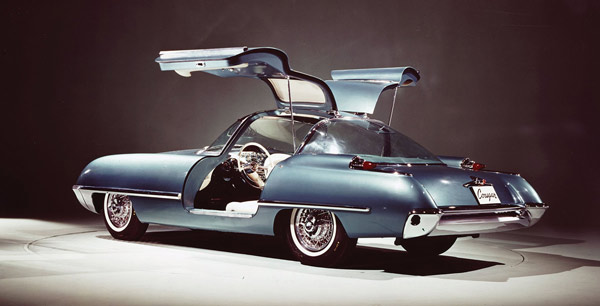
In the early 1960s, one such car that toured the circuit was Ford's stunning Cougar 406. This dark-green coupe was based on a modified contemporary Thunderbird chassis. In the mid 1950s, under George Walker's reign at Ford Styling, the hottest property in the company catalog was the sporty two-seat Thunderbird. Using that car's 102-in. wheelbase as a starting point, several concepts were toyed with for future generations of possible two-seat T-Birds. While Thunderbird was Ford's "halo" car of the era, it was not a big profit maker, and the man in charge of the Ford Division, Robert S. McNamara, had different plans for the T-Bird. He would see it grow into a profitable four-passenger personal luxury car.








No comments:
Post a Comment